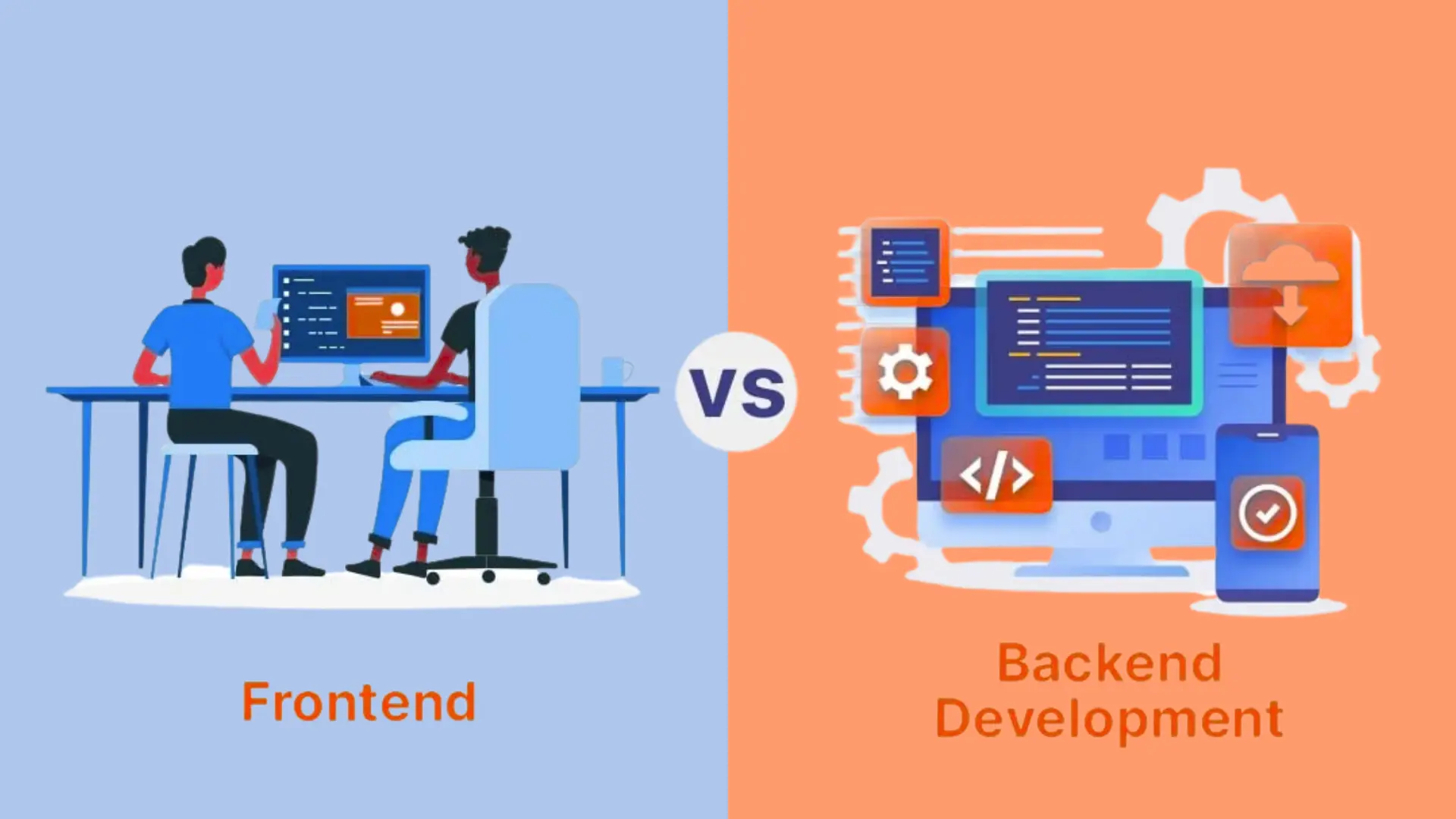
Frontend vs Backend Development: Which One Should You Choose?
If you’re stepping into the world of web development, one of the first big decisions you’ll face is choosing between frontend and backend development. Both paths are essential, both are in demand, and both can lead to successful careers—but they require different skills, interests, and mindsets.
So, how do you decide which one is right for you? Let’s break it down in a simple and practical way.
What Is Frontend Development?
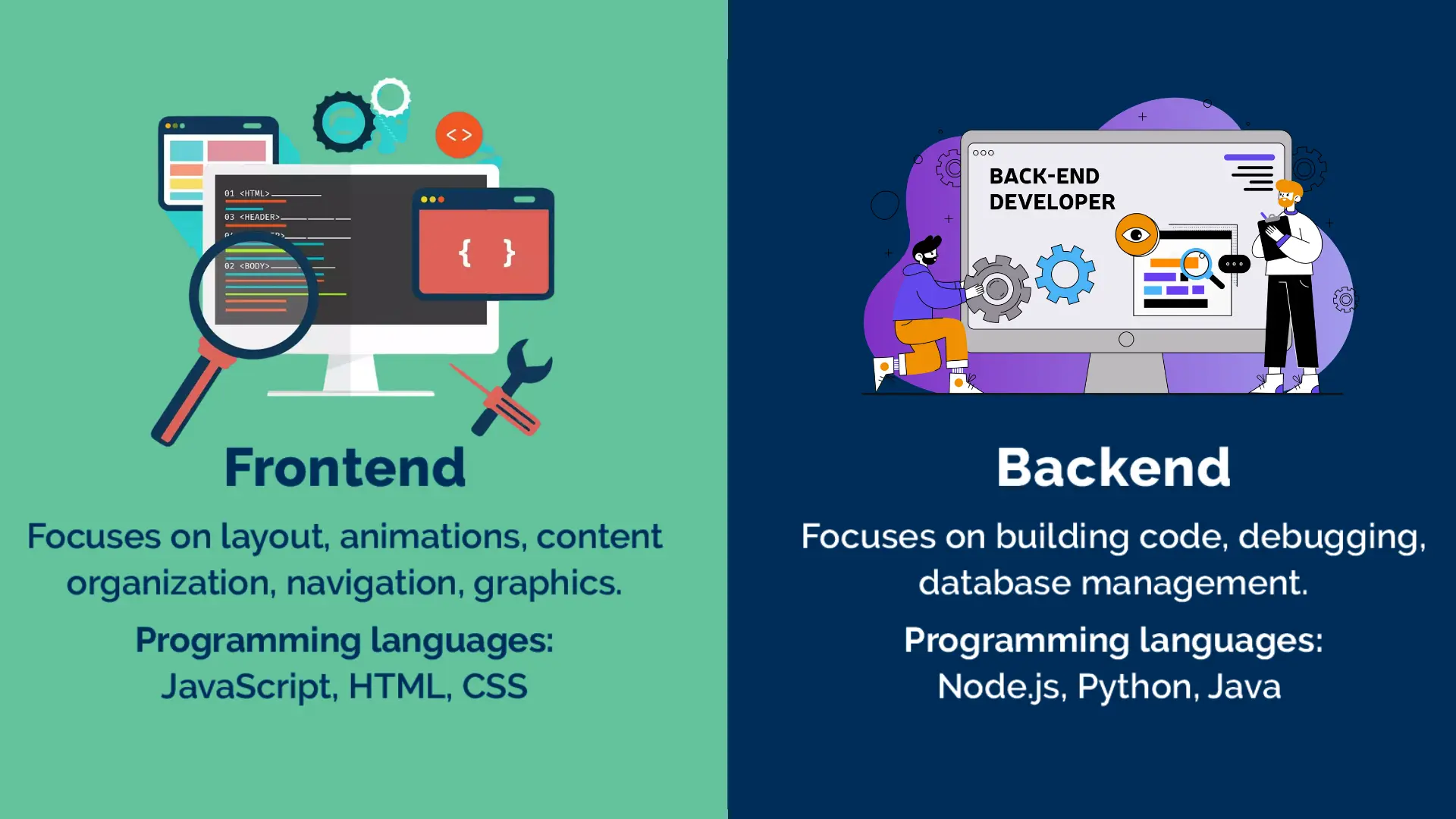
Frontend development focuses on everything users see and interact with on a website or web application. It’s all about design, layout, and user experience.
Frontend developers use technologies like:
- HTML (structure)
- CSS (styling)
- JavaScript (interactivity)
They also work with modern frameworks and libraries such as React, Vue, and Angular to build dynamic interfaces.
Key Responsibilities:
- Designing responsive layouts
- Creating interactive UI elements
- Ensuring cross-browser compatibility
- Improving user experience (UX)
If you enjoy creativity, visuals, and bringing designs to life, frontend development might be a perfect fit.
What Is Backend Development?
Backend development works behind the scenes. It focuses on how the website functions, how data is stored, and how everything connects.
Backend developers typically work with:
- Programming languages like Node.js, Python, PHP, or Java
- Databases such as MySQL, MongoDB, or PostgreSQL
- APIs and server management
Key Responsibilities:
- Building and managing servers
- Creating APIs
- Handling databases
- Ensuring performance and security
If you enjoy logic, problem-solving, and working with systems and data, backend development may suit you better.
Frontend vs Backend: Key Differences
| Feature | Frontend Development | Backend Development |
|---|---|---|
| Focus | User interface & design | Server, logic & database |
| Skills | Design, UI/UX, responsiveness | Logic, security, data handling |
| Tools | HTML, CSS, JS, React | Node.js, Python, PHP |
| Work Style | Visual & creative | Logical & analytical |
| Output | What users see | How everything works |
What Is Full-Stack Development?
Full-stack development is a combination of both frontend and backend. A full-stack developer can build an entire web application from start to finish.
This path is ideal if you:
- Want more flexibility in your career
- Like understanding the complete system
- Plan to work as a freelancer or start your own projects
However, it requires more time and effort to master both sides.
Which One Should You Choose?
The answer depends on your interests and goals.
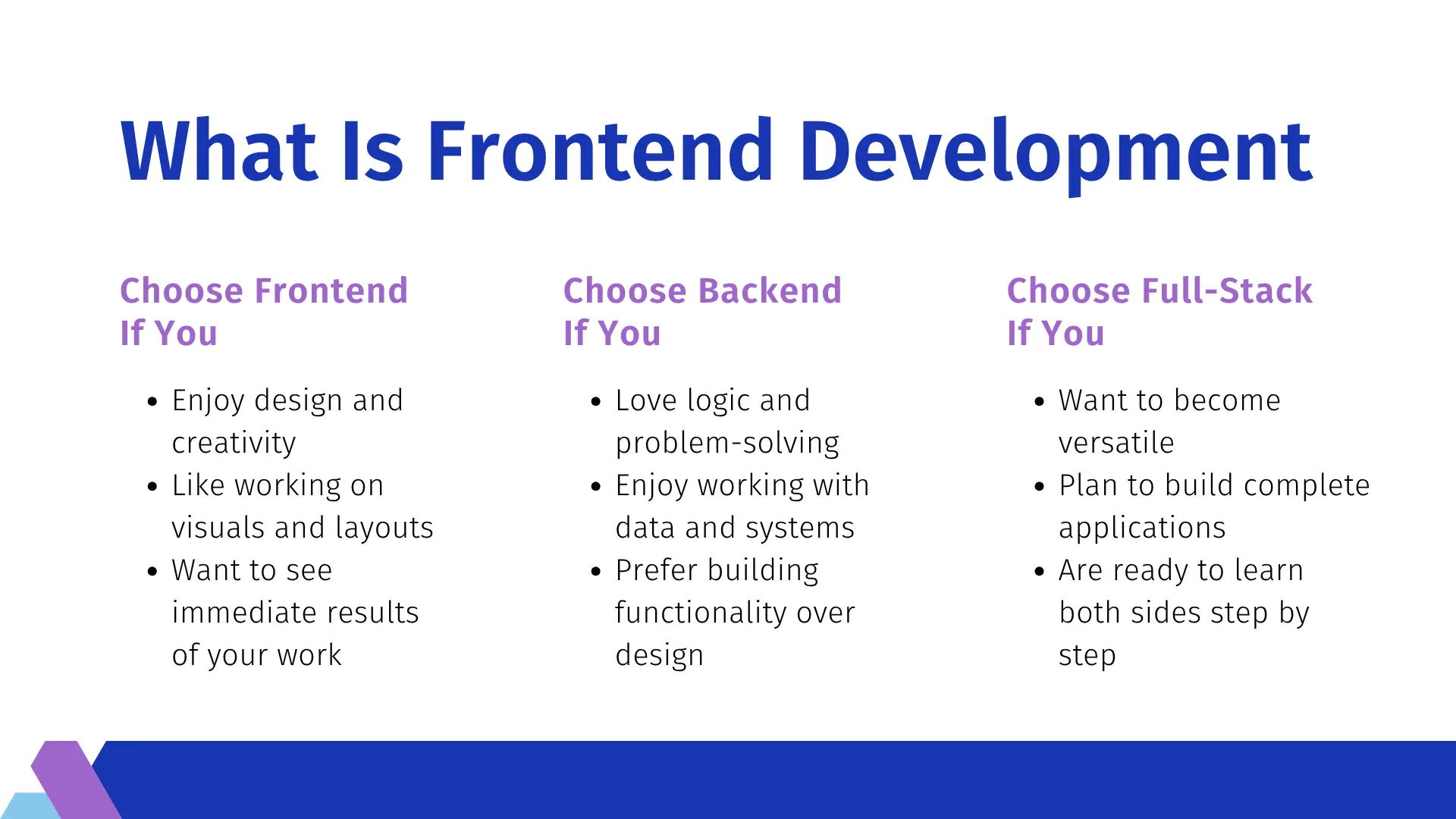
Choose Frontend If You:
- Enjoy design and creativity
- Like working on visuals and layouts
- Want to see immediate results of your work
Choose Backend If You:
- Love logic and problem-solving
- Enjoy working with data and systems
- Prefer building functionality over design
Choose Full-Stack If You:
- Want to become versatile
- Plan to build complete applications
- Are ready to learn both sides step by step
Job Opportunities and Demand
Both frontend and backend developers are in high demand worldwide. Companies need experts on both sides to build fast, scalable, and user-friendly applications.
Frontend roles are often more visible, while backend roles are critical for performance and security. Full-stack developers, on the other hand, are highly valued for their flexibility.
Final Thoughts
There is no “better” option between frontend and backend development—only what suits you best.
The smartest approach is to:
- Start with one area
- Build strong fundamentals
- Gradually explore the other side
In today’s tech world, adaptability is key. Whether you choose frontend, backend, or full-stack, continuous learning and hands-on practice will define your success.
Remember, every great website or app is a combination of both frontend and backend working together. Your journey starts with choosing one—but it doesn’t have to end there.